Pre-release Book Launch Event: Inside the Compost Bin

The pre-release book launch event was a success! I really appreciate everyone who came out: friends, family, compost enthusiasts, and the compost curious. Their attendance made it possible for all the books to sell out at the venue before the event was over! They definitely got the first of first editions– I haven’t even received my author copies yet! (My first time touching the a physical copy of the book was at the venue, which I felt was right considering Solana Center for Environmental Innovation taught me to compost!)

Special thanks to my publisher, Tilbury House, and my publicist, Dominic, for making it possible that I had my launch event at the headquarters of the organization I learned to compost with and whom this book would not be possible without: Solana Center. A big thank you also to the staff at Solana Center who attended: Robin, Erin, Liz, and Jennifer, and all the other volunteers who came out on a Saturday morning to add the final touches to the Solana Center working garden that became the venue. I mean look at it! It’s so beautiful:
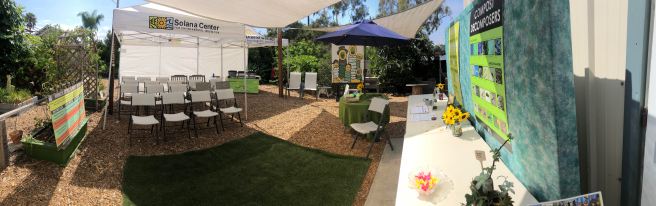
Book Launch Venue at Solana Center (one of the few photos I remembered to take!)

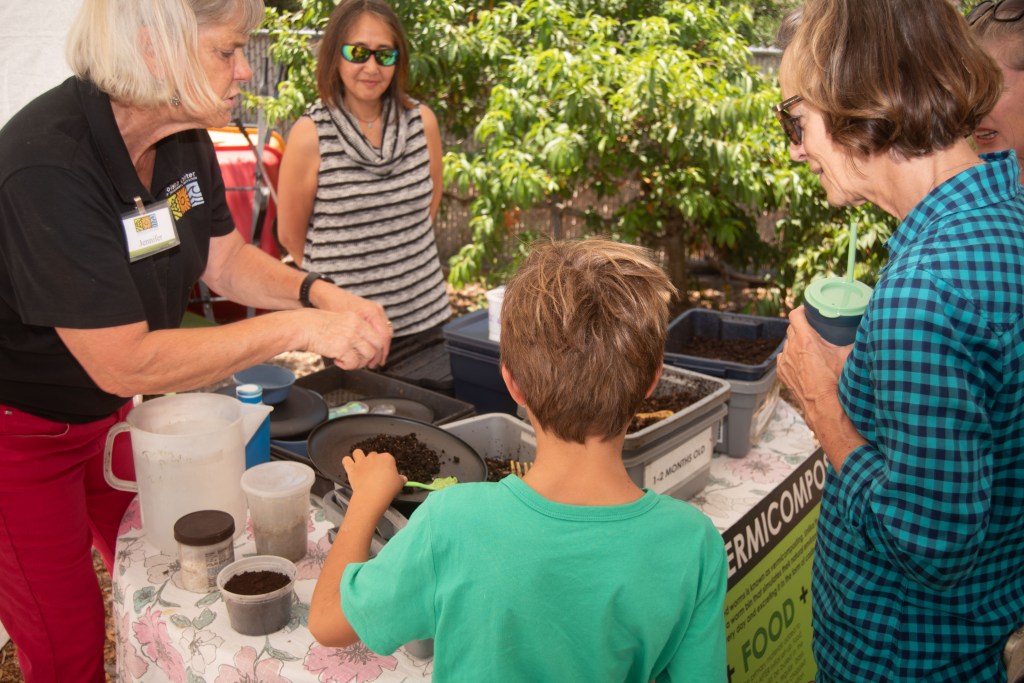
There were educational posters that served as a backdrop to my book reading and Q&A on compost critters and the compost process. There was a vermicomposting station, a caterpillar picture booth, and a bunch of cool compost-related stuff that people can look at and tour! Here’s some photos from the event. All images unless otherwise noted are courtesy of Solana Center for Environmental Innovation:
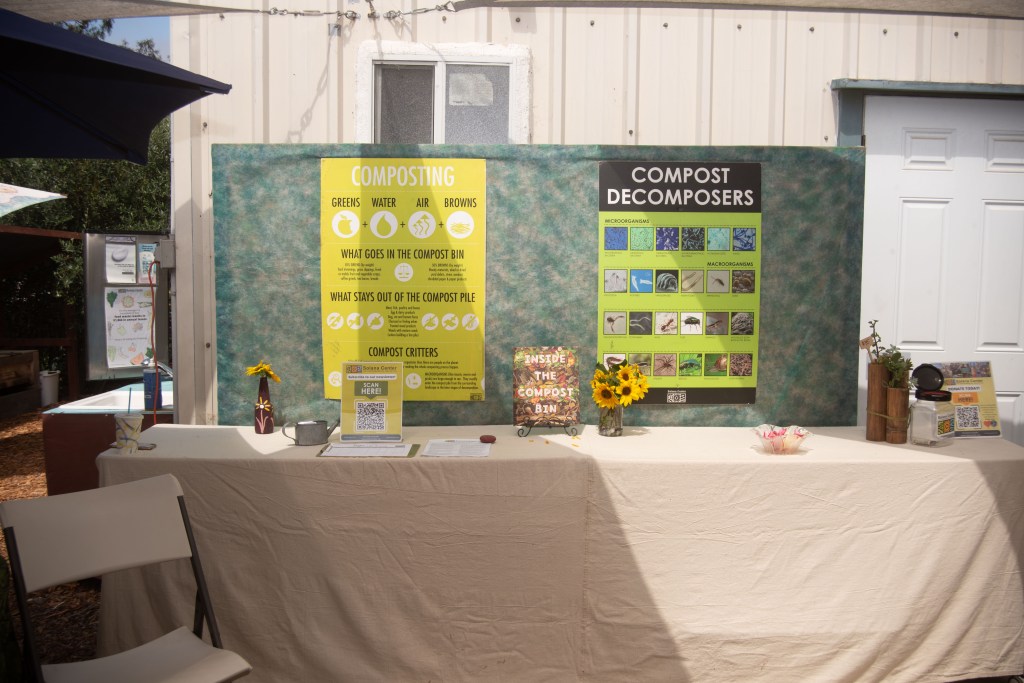
Backdrop for book reading and Q&A
Some attendees discovering vermicomposting!
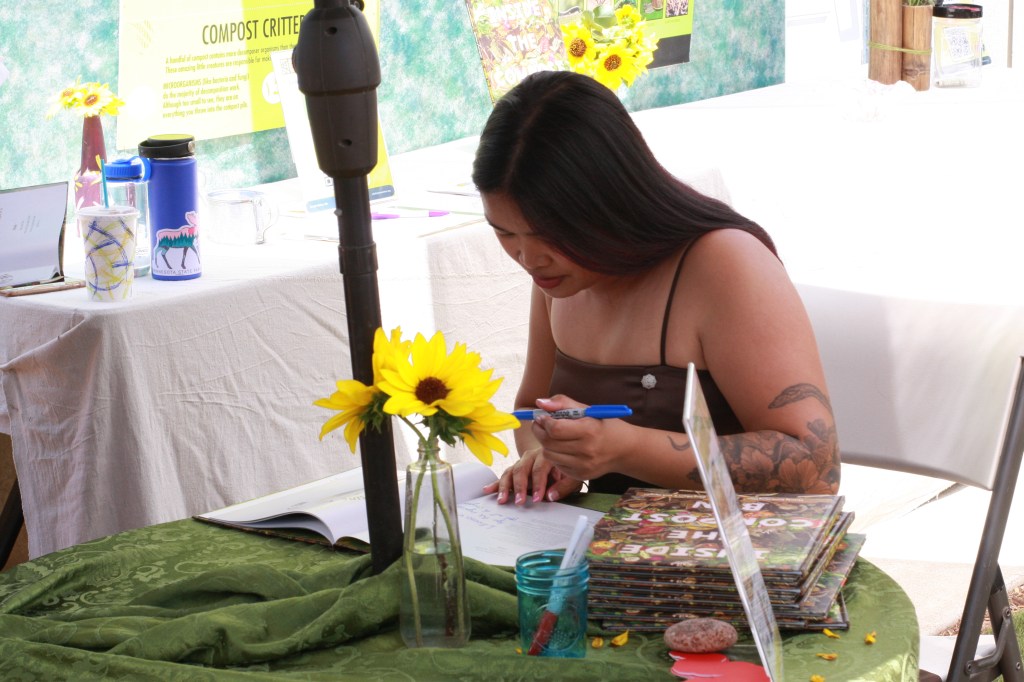
Book reading time!

It was so great to talk to everyone during the Q&A and also during the book signing. While I signed books, it was fun to find out where they were going to. Some books were going to nieces and nephews, one was going to a cousin who loved composting, one was going to a daughter who couldn’t attend, another was going to a library, a few were going to classrooms, and a bunch were staying right with the person who was purchasing the book. I was excited for all the journeys these books would make, and hope they make their readers happy.
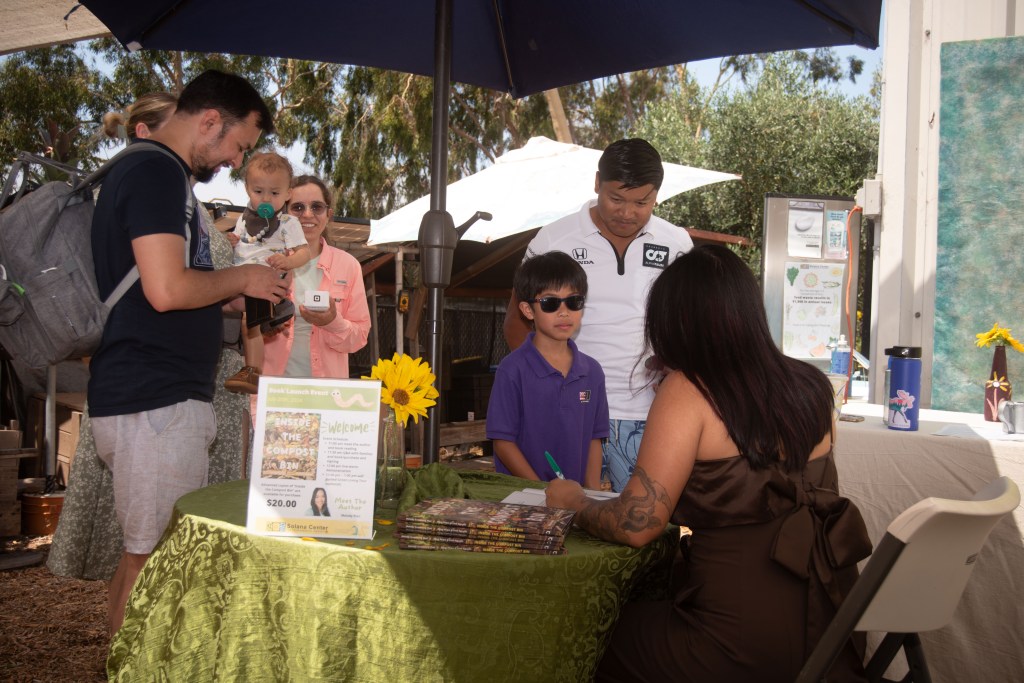
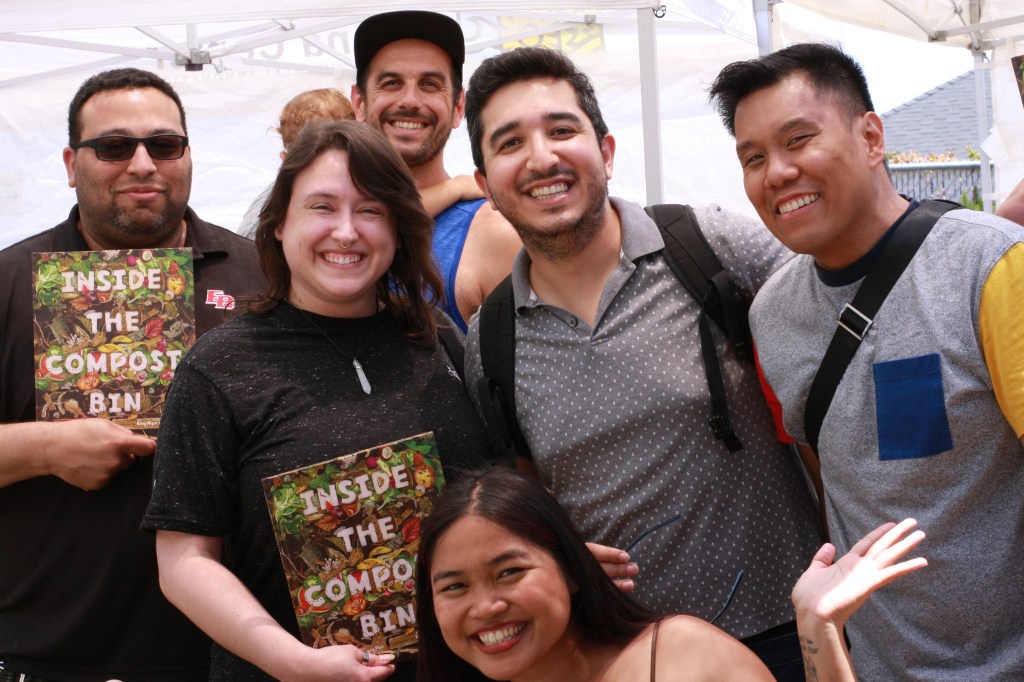
Some of my childhood friends came! Every person in this photo I’ve known for 20+ years. Amazing, right?

Thank you again everyone for the support and encouragement! Looking forward to the official date of my book launch on August 13th!
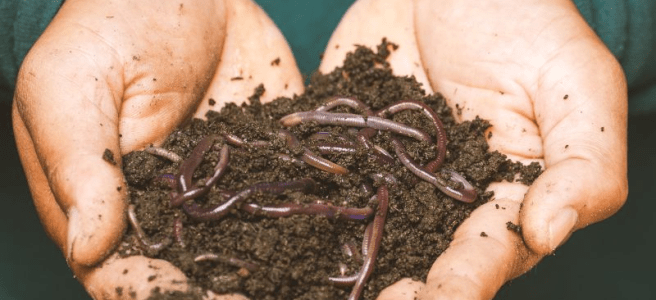
What should I do with my composting worms while on a trip?

One of the things I did to fulfill my hours for my Master Composter certification back in 2019 was write a few articles for Solana Center. Recently, they posted one of those articles I wrote years ago in their newsletter and I thought it was good information to cross-post. =D

Check out the original post source here: https://solanacenter.org/2024/03/22/from-the-rotline-what-should-i-do-with-my-worms-while-on-a-trip/

Question: “What should I do with my worms while on a trip?”

Answer: Depending on the length of your trip, you will likely not need to do anything at all. Even a new population of worms only needs to be monitored every few days to assess how much food was eaten, moisture levels, and whether they need more food. If you’re planning to go out of town for the holidays this year, regardless of how long your trip may be, consider following these steps prior to embarking on your adventure: 

1. Make sure they have a good amount of bedding at a proper moisture amount. Instead of throwing lots of kitchen scraps into your worm bin to make up for your absence, which could disrupt the pH of your bin or even smother your worms, make sure you leave your worms an adequate amount of moist bedding– at least a six-inch layer. Worms can live off bedding material such as shredded paper, coffee grounds, or dried leaves, for a month or longer! Of course, you can still add kitchen scraps before you head off, giving them about twice what you’d normally feed your worms weekly.

2. Ensure your bin is in a shaded area. Worms do best at temperatures between 55°F – 79°F. Temperatures above 85°F can be lethal. 

3. If you are leaving during the wintertime, consider insulating your bin with a blanket or soil, or bring the bin inside in case of cold snaps. While worms do better in colder temperatures than hot, temperatures below 32°F can devastate your worm population. 

4. If you’ll be gone over a month, consider recruiting a “worm-sitter” to visit and add some food scraps after a few weeks. You can even prep some kitchen scraps in a bag or container in the freezer for easy feeding; frozen scraps can be added straight to the bin. Just make sure your sitter knows to cover the kitchen scraps with bedding so you aren’t greeted by flies upon your return!

When you return from your trip, provide your worms with some fresh kitchen scraps and they’ll be happy to see you!

Written by Certified Master Composter Melody Plan

Check out the original post source here: https://solanacenter.org/2024/03/22/from-the-rotline-what-should-i-do-with-my-worms-while-on-a-trip/

Cover Reveal + How a New Years Resolution Eventually Made Me an Author

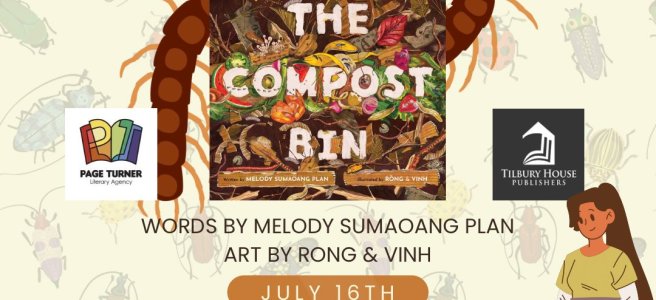
Happy start of Earth Month! Dan was super awesome and put together this info graphic to show off the beautiful cover illustrated by talented artists, Rong and Vinh. Seriously, look how LOVELY:

I’m so excited to be able to hold a physical copy in my hands in just a few months, and can’t wait until you all can see what we created together.

I was inspired to start composting because of a new years resolution I made at the beginning of 2019. I had read a headline of an article about a girl, maybe about 11 or 12, who fit all her trash in a single year in a mason jar. I remember thinking to myself, “That’s impossible,” and sort of blowing it off, but for some reason the topic of the headline stuck with me throughout the day– it offended me somehow, bruised my ego as someone who considered themselves pretty eco-conscious. I was arrogant enough then to think, if I can’t do it then how can someone else? But as I thought more about the concept, it dawned on me that I was already considering it impossible without having ever tried.

I figured then that while I likely couldn’t fit everything in a mason jar right away, I could probably fit all my trash in one bin over the course of a year. And thus, the new years resolution: “Fit all my waste in one trash bin” was born.

This caused me to do a waste audit and investigate what I was throwing away. I found very quickly that about 75-85% of what I was throwing out weekly was food waste (banana peels, onion rinds, leftovers that gone bad, etc.). And so I knew if I was going to be honest about this resolution, I was going to have to learn to compost. I signed up for Solana Center’s Master Composter program quickly after that.

And the rest is history. =)

Volunteering with Solana Center to teach others the wonders of compost

To say I loved learning and teaching others how to compost feels like an understatement. There’s something familiar and comforting about returning the resources the world offers you back to the land to nourish it for future generations. Like our very own return to roots, as our predecessors did similarly by burying their own waste back into the soil. A connection to our past for a better, healthier future. The compost process is methodical, meditative, patient– it’s observing nature and mimicking her in a way that shows our gratitude to where food comes from, by giving organics new life, right beneath our feet.

Organics, like food waste, that end up in a landfill are generally wrapped in plastic trash bags, likely never to touch earth in our lifetime, our kids’ lifetime, or our great-great-great-great-grandkids’ lifetimes either. It’s nuts to think that every single piece of plastic ever made since it was invented, is still here with us. You might hear that plastic can decompose in as little as 20 years now with some new technologies, but even those plastics never truly go away, they just get smaller and smaller and become microplastics, to be eaten by marine life and leading to malnutrition, fertility reduction, and mortality.

This is all to say– this is how I got started composting, from a completely different place (assuaging my ego), and honestly it doesn’t really matter why you decide to start composting. What matters is, you start.

Maybe next new years resolution is fitting everything in a mason jar, eh? Til next time.

Melody